Project Overview
A farmhouse roof
with mountain views.
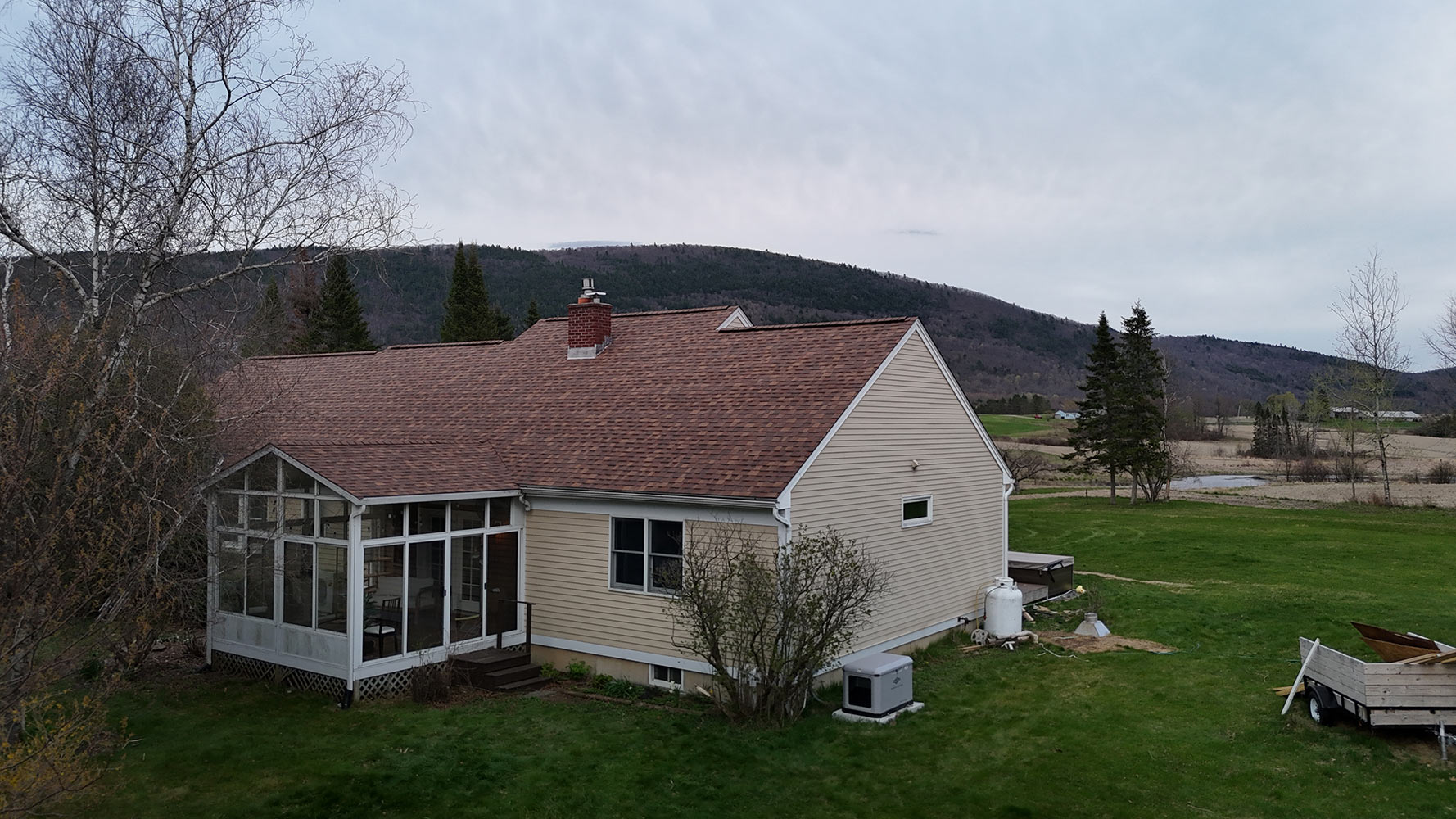
Rivers Construction completed a full tear-off and shingle replacement on this Lincoln farmhouse, set against Vermont's Green Mountains with farmland stretching out on every side.
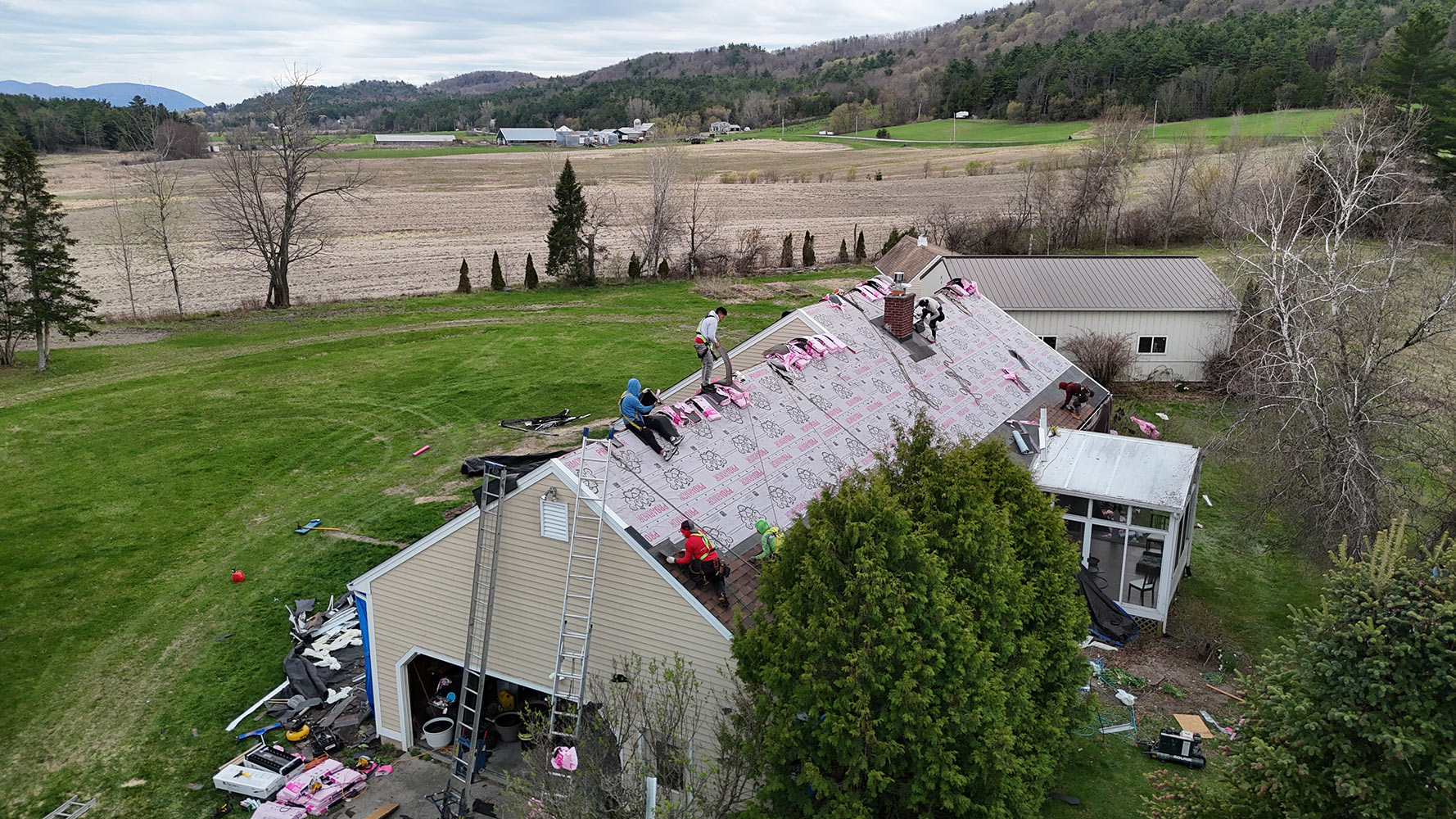
A full crew handled the tear-off and installation in a single push, with new architectural shingles, ice & water shield, and synthetic underlayment installed throughout.
- Full shingle tear-off and disposal
- Full crew, single-day tear-off
- Ice & water shield at eaves, valleys, and penetrations
- Synthetic underlayment throughout
- New ridge cap and ridge vents
- Flashing replacement at all penetrations
Get a Free Quote
How It's Done
The complete shingle system,
layer by layer.
A proper shingle replacement in Vermont isn't just swapping old shingles for new ones — it's installing a fully engineered roofing system designed to handle decades of freeze-thaw cycles, heavy snow loads, and ice dam pressure. Here's how we built this Lincoln roof from the deck up.
Tear-Off and Deck Assessment
Every full replacement starts with stripping the existing roofing system down to bare sheathing. We inspected every square foot of the Lincoln roof deck for rot, delamination, soft spots, and failed fasteners before any new material went on. Damaged or saturated sheathing sections were replaced before the layered system was installed.
Ice & Water Shield
This self-adhering membrane bonds directly to the deck and seals around fastener penetrations, creating a continuous waterproof barrier that holds even when ice dams force standing water beneath the shingles. We installed it at all eaves, valleys, and penetrations — Vermont's freeze-thaw cycles generate serious ice dam pressure, and this layer is what stops it from becoming a leak.
Synthetic Underlayment
Synthetic underlayment was installed across the full roof deck as a secondary moisture barrier — lighter and more tear-resistant than traditional felt, and stable across temperature extremes without wrinkling or going brittle.
Owens Corning Duration Shingles
Owens Corning Duration was selected for this Lincoln home for its reinforced nailing zone and dimensional profile — strong wind resistance, resistance to premature granule loss, and a clean, substantial finished appearance that holds up in Vermont's harsh UV and freeze-thaw environment.
Ridge Cap, Ventilation & Flashing
New ridge vent was installed along the full ridge line to complete attic ventilation, reducing moisture buildup and helping prevent ice dams at the eaves. All flashing — step, counter, and drip edge — was replaced rather than reused, since corroded or improperly lapped flashing is one of the most common sources of roof leaks.